
Dinner is served.
Our Story
Once you see how commercial cat food is made, you can't unsee it.
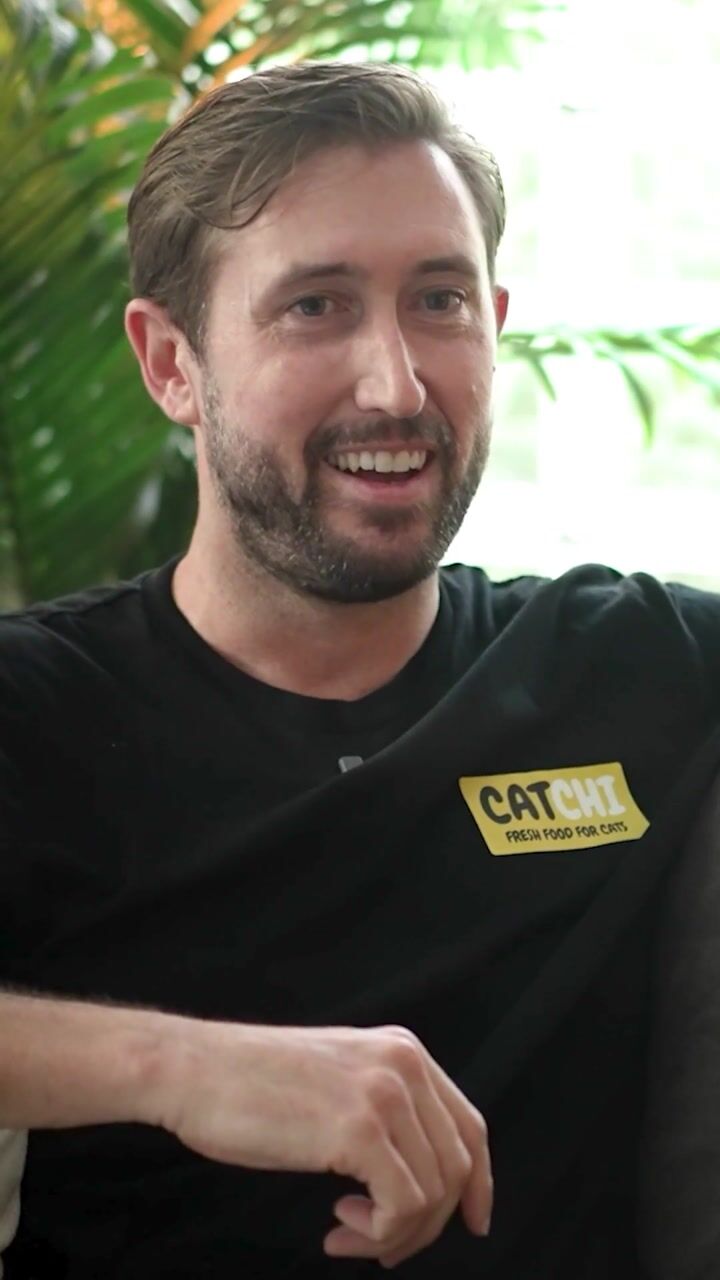
▶
Matt's moment
I was Head of Product Development for fresh food at Woolworths. Then I moved to Pet Circle. That's when I walked through my first dry food manufacturing site and saw flours, wheat, corn, potato; being mixed with a small amount of meat powder and extruded into kibble. That was it. I never fed kibble again.
And I've seen the change in my cat ever since. He had a patchy, dull coat that I'd just assumed was a Devon Rex thing. But within weeks of changing his diet, it started filling in. Years later, it's still improving.
Huw's moment
I grew up on a farm, in our family business. We always had rescues, and fed them real food, often leftover meat from our own cooking. That was normal to me, but I didn't know it was unusual until much later.
When I got Queenie, the shelter sent her home with a bag of kibble. I read the ingredients and put it to the side. I was having steak that night, so I gave her a little.
She ate it immediately. Climbed up my leg looking for more.
I kept feeding her real food and she was a different cat. Coat soft like velvet, greeting me at the door every day.
But it wasn't complete and balanced. The quality was there, but the nutrition wasn't formulated. Doing it properly on your own is hard.
We built CatChi for our cats. Everything else follows.
What we built
We talked. We realised others faced this problem too. Cat parents everywhere knew fresh food was better, but making it complete, balanced and convenient? That was the hard part.
So we set out to solve it. Not just for Queenie and Morty, but for everyone.